
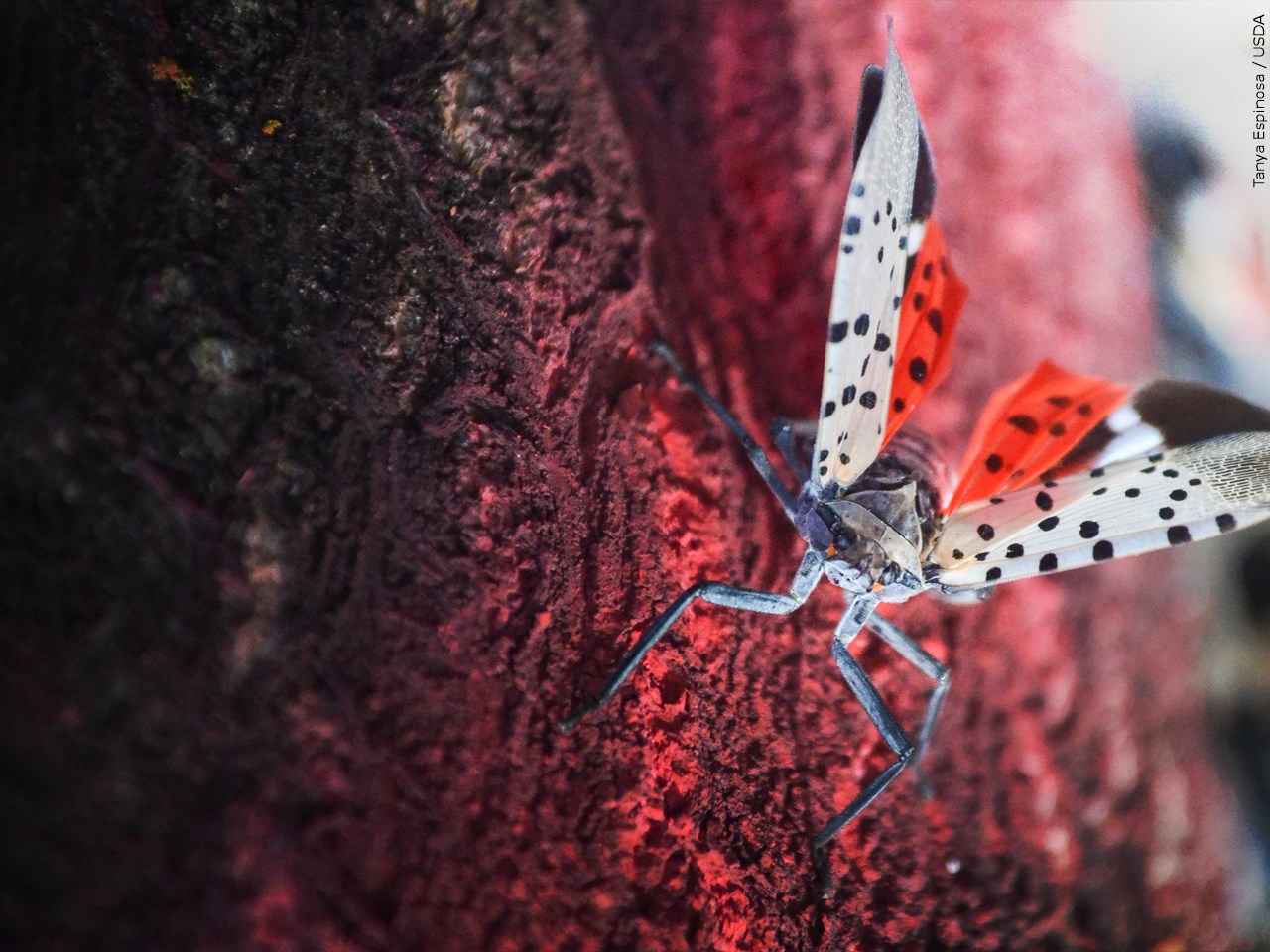
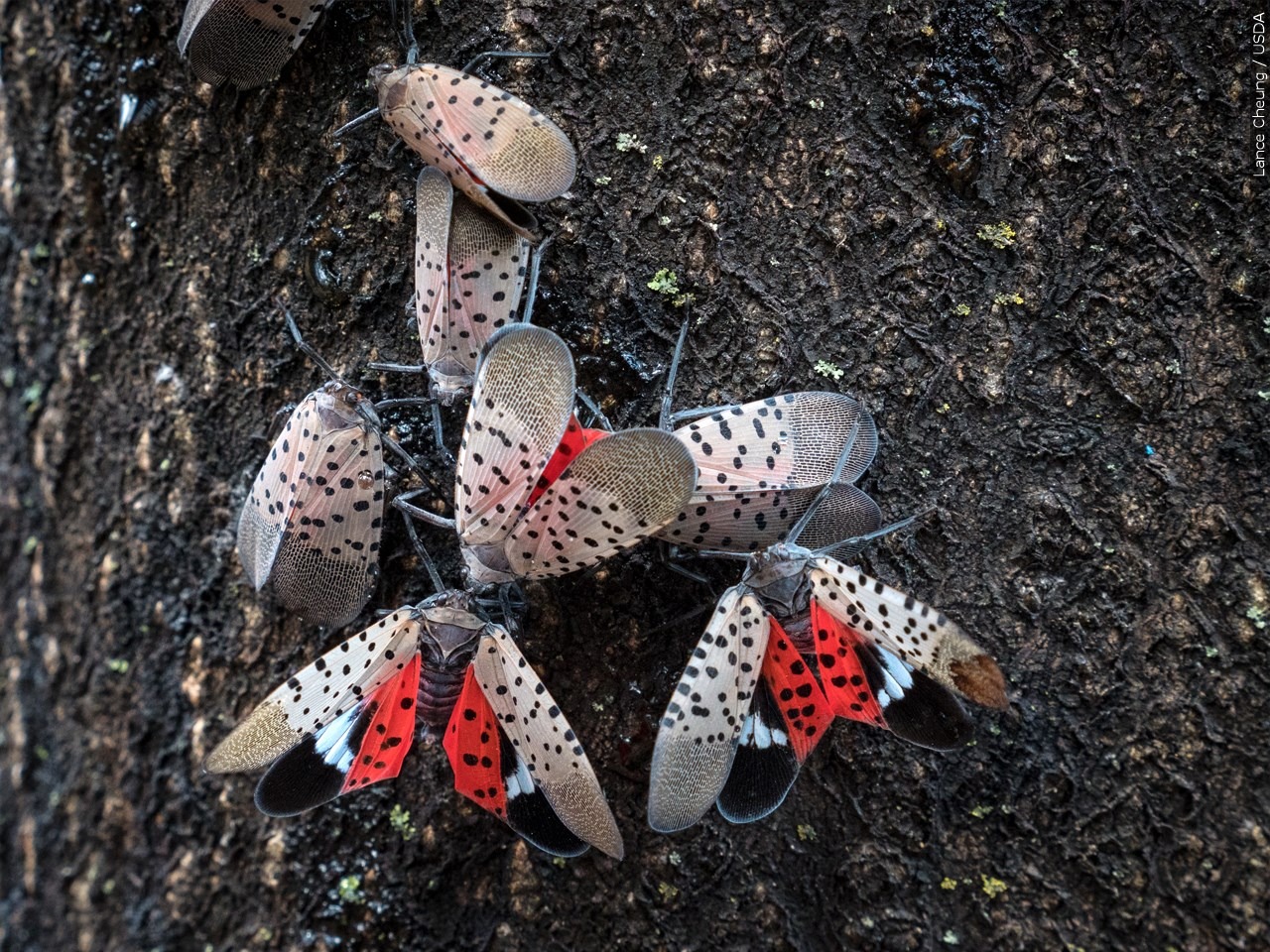
BLACKSBURG, Va. — A Virginia Tech study suggests ordinary pet dogs could become an important tool fighting the invasive spotted lanternfly, with trained dogs finding more than twice as many egg masses as experienced human searchers in some field tests.
The spotted lanternfly has spread to 19 states and threatens vineyards, orchards and forests. Virginia Tech researchers found that dogs trained by everyday owners located an average of three egg-mass locations each at heavily vegetated sites, compared with 1.3 for each human searcher.
How researchers tested detection abilities
The Virginia Tech College of Agriculture and Life Sciences study involved 26 dog-handler teams in distance-testing exercises, with nine teams searching half-acre areas where egg mass locations were unknown. After trained human searchers, including plant disease specialists, completed 10-minute searches, dog teams followed with their own 10-minute searches.
“The biggest problem with detection work is figuring from the human side how to isolate the specific odors,” said Virginia Tech researcher Sally Dickinson. “The spotted lanternfly egg masses probably smell to us a lot like the bark of the trees that they’re living on or whatever other environmental stuff, kind of a musty earthy smell. But to the dogs it’s actually a really distinct odor that they can target specifically and discriminate against other odors.”
Researchers also found that dogs trained on non-living egg masses could recognize live ones in the field, which means new detection teams can train without risking the accidental spread of the invasive pest.
How dog owners could help fight the pest
The research recruited community volunteers to train their own dogs to detect spotted lanternfly egg masses. Professional detection dog teams remain limited, but researchers say everyday dog owners could fill that gap.
“When we were recruiting for the study we had over 2,000 folks interested in participating with very little advertising on our part, and I think that just speaks to the fact that people want to work with their dogs, they want to help their communities and this bridges those interests,” said Erica Feuerbacher, the study’s lead researcher and professor in the School of Animal Sciences. “The training can take some effort, there is some time commitment there for sure, but I think for the folks that are interested in already going out and looking for new fun things to do with their dogs, this is really attractive because when they do that, they’re essentially playing with their dogs but are also serving their community.”
Dogs ranging from Boston terriers to pugs successfully participated in the project, suggesting the work is not limited to traditional working breeds.
Real-world testing shows dogs’ potential
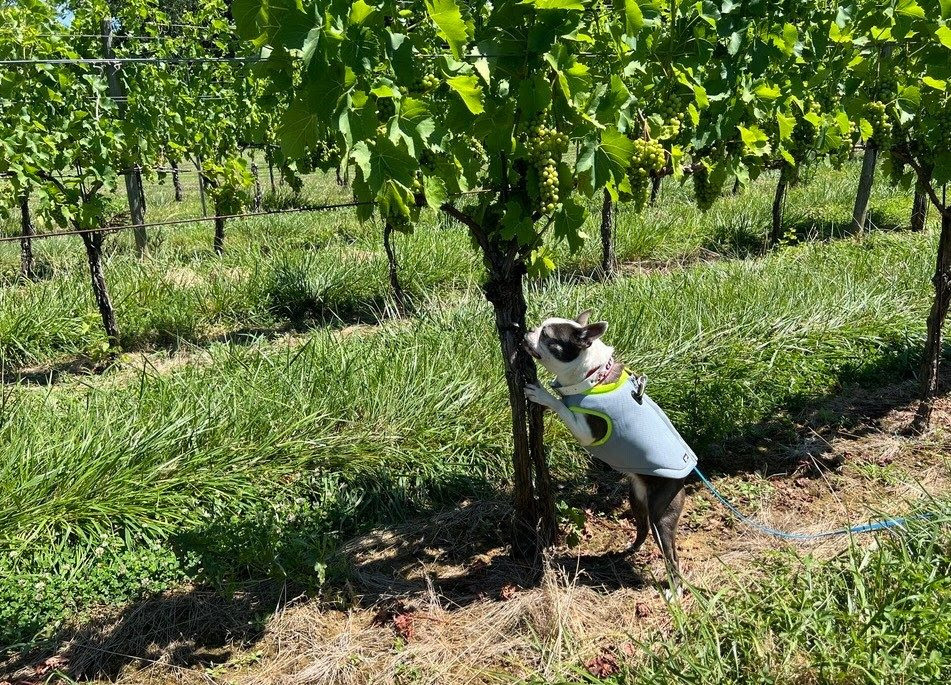
At a Maryland vineyard, Debi Persing guided her Boston terrier, Xephyr, slowly down a row of grapevines. Vineyard workers and scientists had already identified several invasive spotted lanternfly egg masses hidden among the vines. They believed they had found them all.
Then Xephyr stopped at a vine they had marked clear. The little dog sat and pawed at the plant insistently.
When researchers checked more closely, they found the egg masses Xephyr had detected but trained experts missed.
“She was adamant,” Persing said. “She’s a machine at finding odor.”
Understanding detection distance
Researchers also tested how close dogs needed to be to reliably find egg masses. Dogs performed best when egg masses were within about 16 feet of the search path, and detections dropped to zero beyond 50 feet.
“The distance testing helps us understand how these dogs need to be deployed,” Feuerbacher said. “Handlers need to move methodically through an area, so dogs stay close enough to detect the odor.”
Expanding detection to other agricultural threats
Feuerbacher and co-author Sally Dickinson partnered with Virginia Tech grape disease pathologist Mizuho Nita and Texas Tech University researchers. Their 2025 study showed that trained pets could reliably detect spotted lanternfly egg masses in controlled settings. This 2026 study tested whether the dogs could perform in real-world conditions.
“What this means is that we can turn to everyday dogs and their owners and train them as a flexible early detection force,” Feuerbacher said. “In places where the spotted lanternfly hasn’t reached yet, teams could train in advance and be ready to detect it before it becomes a major infestation.”
The researchers now want to know whether dog-handler teams could help sniff out other agricultural threats, including plant diseases. They will investigate whether dogs and their owners can help detect Pierce’s disease, a bacterial infection that can damage and kill grapevines.
“As we face more environmental issues, more agricultural issues — hitchhiker insects, invasive species, diseases — having a widespread network of trained dogs is exciting,” Feuerbacher said. “It really opens people’s eyes to what their dogs are capable of. Your dog, regardless of its breed, could do this.”
Xephyr, now 12, still enjoys scent training several times a week. Persing said she’d jump at the chance to search for spotted lanternfly again.
“I guess sometimes the nose is more important than the eyes,” she said. “She’s my best girl.”
The research was funded by the U.S. Department of Agriculture’s National Institute of Food and Agriculture.
For more information, see the full Virginia Tech news release.