Roanoke Mayor Joe Cobb said Friday that the city faces a difficult fiscal reality after finalizing $35 million in combined budget reductions for municipal services and public schools.
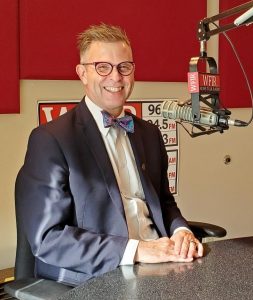
Cobb detailed the trade-offs during a Friday morning interview with WFIR, touching on the city’s newly adopted budget, pending zoning changes, the future of Evans Spring and Roanoke’s expanding use of public safety technology. We did not get a new photo with Mayor Cobb Friday but you can watch the full interview by clicking here.
Balancing city and school reductions
The newly adopted budget includes $19 million in cuts to city departments and $16 million in reductions for Roanoke City Public Schools. Cobb described the process as a series of “very difficult decisions” driven by slowing revenue projections.
Despite the cuts, the city held the real estate tax rate flat at $1.22 per $100 of assessed value. The plan also includes a 2% pay raise for city employees to bring all city workers to a living wage.
“I think we’ve arrived at a place that is the best-case scenario for this moment in time,” Cobb said.
He thanked the city manager, budget staff, department heads, residents and the school system for working through what he described as a difficult budget process. Cobb said the city will continue looking for ways to address rising costs while increasing revenue.
Zoning changes and the Evans Spring pivot
Roanoke remains landlocked and faces what Cobb described as a significant housing shortage. He defended an inclusionary zoning proposal that seeks to remove “remnants of redlining” and restrictive housing covenants by allowing more housing options across the city.
Cobb said the city must look at vacant buildable lots, homes that can be rehabilitated and properties that could move through the land bank if Roanoke is going to grow and address housing affordability.
The zoning debate came during a City Council day Cobb said stretched nearly 12 hours. Opponents argue the plan threatens the character of historic neighborhoods, while supporters say the changes are needed to improve affordability and address homelessness.
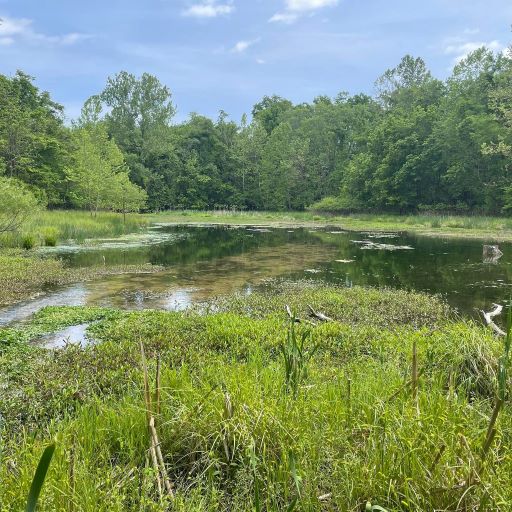
Nearby, the long-disputed 150-acre Evans Spring parcel saw a shift this week. Council members voted unanimously to add a conservation option to the development framework. The move also removed language calling for a direct interstate connector to I-581.
“This is not a set-in-stone plan,” Cobb said.
He emphasized that the new framework creates parameters for potential development while keeping the door open for land preservation. Any actual development proposal would still have to go through the planning commission, rezoning review and public hearings. The land is privately owned, and City Council does not have anything else to consider on Evans Spring until a plan backed by the property owners is brought forward.
Surveillance technology and privacy concerns
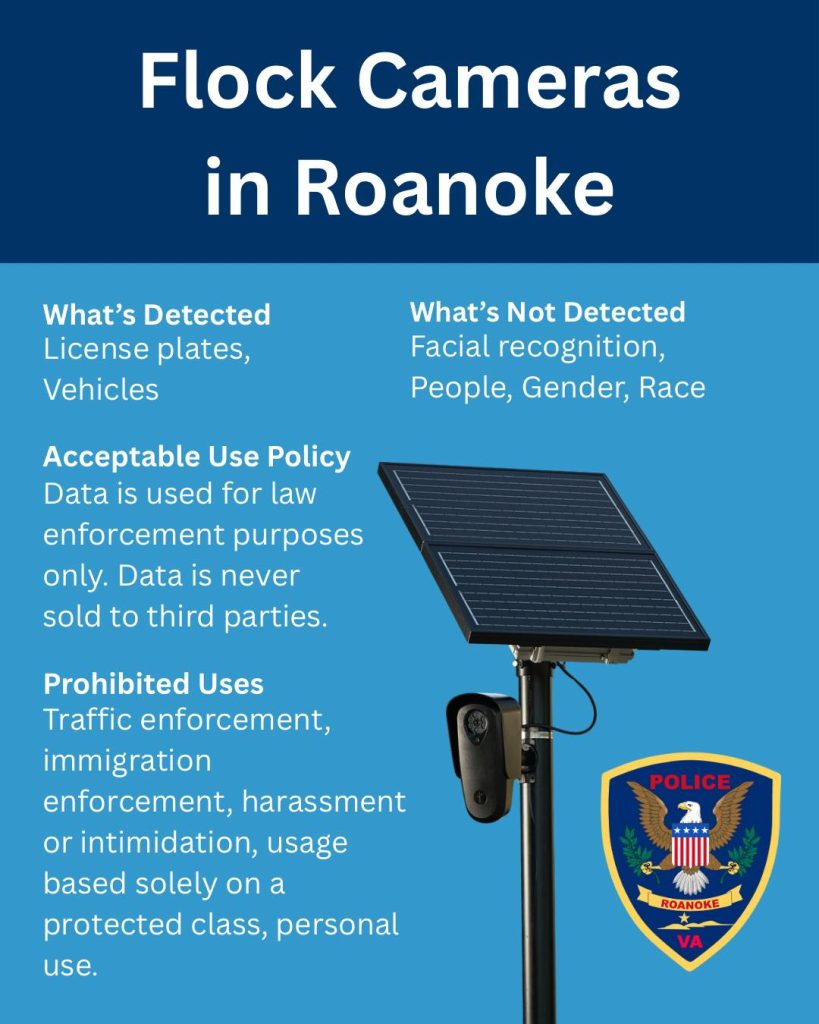
Public safety remains a priority as the city expands its use of surveillance tools. Roanoke currently operates 24 Flock Safety license plate readers. Police said the cameras recently helped locate a missing man with dementia and solve two unrelated gas station armed robberies.
Cobb said the technology also helped authorities track a stolen vehicle to another state.
However, the city is facing pushback over the planned installation of 75 Raven acoustic sensors. While the sensors are designed to detect gunshots, Flock’s product documentation says Raven can detect “sounds of human distress,” including screaming and shouting.
Cobb said he understands residents’ privacy concerns but said his understanding is that the system is activated by noises similar to gunshots, not by human voices.
“A lot of people were asking questions because they feel like the audio devices are going to record people’s voices. That is not my understanding,” Cobb said.
Cobb clarified that the Raven sensors have not yet been installed and that contracts have not yet been signed. He described the gunshot detection system as a pilot program funded by a $57,040 federal grant.
“If it works effectively, then let’s continue to find the best technology we can,” Cobb said. “If it doesn’t work and is not effective, then we can stop it.”
A more informed public
Public participation has increased in Roanoke. Cobb said residents are filling council chambers and tuning in via YouTube in numbers he rarely saw during his earlier years on City Council.
Cobb, who has served nine years on the council, said the engagement is encouraging. He said a more informed public leads to better long-term decisions for the city.
“That’s encouraging to me because it means we have a much greater and informed group of people that are making decisions,” Cobb said.